Cashmere Wool
Cashmere Wool
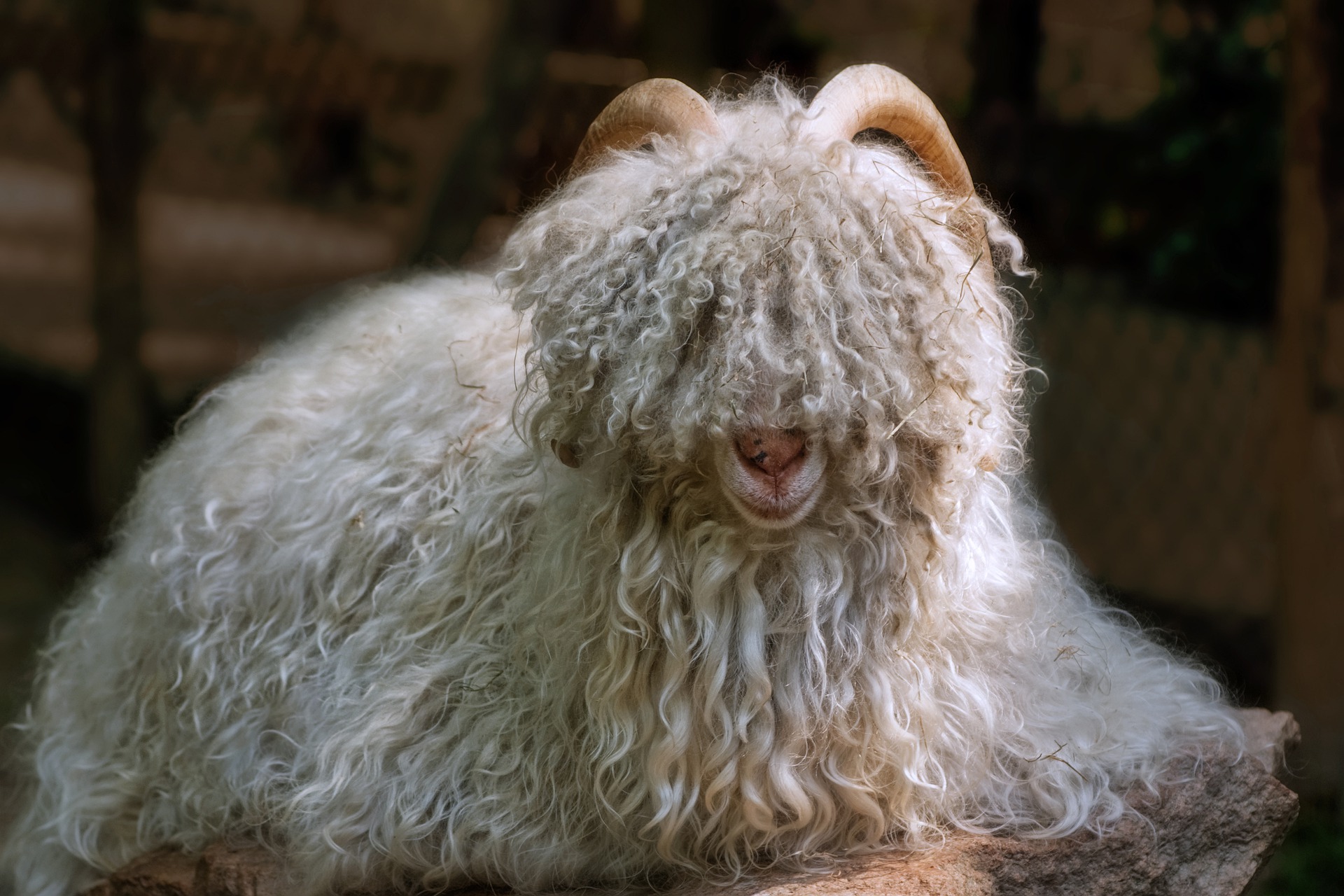
Cashmere is a fiber obtained from the cashmere goat, which is found across Asia, most abundantly in Tibet. The name Cashmere comes from the name of a city in the Kashmir region of northern India, which is the region that raises the most cashmere goats. Cashmere goats are smaller in build than Angora goats. Cashmere goat hair has 2 layers: the outer layer (guard hair) is coarse and long, measuring about 2-5 inches, while the inner layer is fine, soft, but short, measuring about 1-3 inches. Its natural colors are white, gray, and light brown. The fiber is combed out from the goat's body rather than sheared, because every spring the cashmere goat sheds its coat naturally over a period of many weeks. The goat's owner must brush out the loosened hair and then separate the outer coat from the inner coat. A single cashmere goat yields only about 4 ounces of inner-layer fiber.
Under a microscope, the shape of cashmere fiber shows an outer surface cell layer with widely spaced scales, clearly different from other types of animal hair. The middle section of the hair strand is thicker than at the root and tip; viewed in cross-section, it appears round. Fibers with a brown color show colored spots inside. Although cashmere generally shares properties similar to sheep's wool, it differs in that mold can damage cashmere fiber more easily than other types of animal hair.
The yield obtained from genuine cashmere goats each year is very small — making a single coat requires the hair from as many as 30 cashmere goats. Clothing made from genuine cashmere fiber is therefore very expensive. And because of its beauty, softness, comfortable wear, and excellent warmth, it has become highly popular among people of good means. Cashmere fiber can be spun into many different types of yarn and can be made into both thick and thin fabrics. The finer type of cashmere is generally used for tailoring suits, sweaters, and coats, while the coarser type is used for weaving sacks and blended with sheep's wool to make upholstery fabric, among other uses.
Cleaning Method
You don't need to send it to dry cleaning forever — in fact, you can save on dry-cleaning costs for your favorite scarf or coat by cleaning it yourself. Simply use cold water and a mild detergent or baby shampoo to wash it. Do not wring it dry, and lay it flat horizontally on a large towel to dry. When choosing which washing machine brand is best, be sure to check its functions carefully first to see whether it can handle this type of fabric.