
Silk
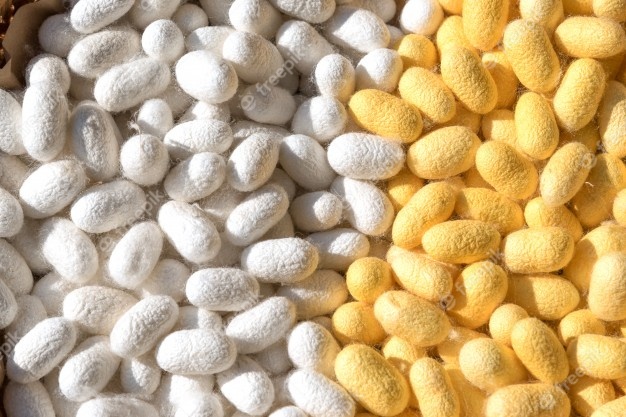 Silk fiber is obtained from the cocoon of the silkworm. In Thailand, silkworms are raised extensively in the northeastern region. Silk has earned the title of "queen of fibers," prized for its luxurious beauty and shimmering, glossy texture that pleases the wearer, though silk fabric tends to be quite expensive. People have known how to use silk for thousands of years. China was the first country to raise silkworms and turn the fiber into silk fabric.
In general, besides having a beautiful, glossy sheen, silk is also very strong and comfortable to wear, adapting well to both hot and cold weather — it feels cool in hot weather and warm in cold weather. Silk dyes easily and can be printed with beautiful patterns. When worn, silk rubs against itself to produce a sound known as "silk rustle." Silk is popularly made into clothing and furnishings that offer luxurious beauty and are used only occasionally, rather than for everyday wear, since silk fabric is quite expensive and difficult to wash and iron. Silk fabric that has had the sericin (gum) fully removed from the fiber becomes lighter in weight and tends to wrinkle more easily, requiring finishing treatments for wrinkle resistance. Silk fabric wears out faster with frequent washing and ironing, and is not resistant to detergents containing concentrated alkalis, nor to sunlight. Washing and ironing silk fabric must therefore be done with more care than other types of fabric.
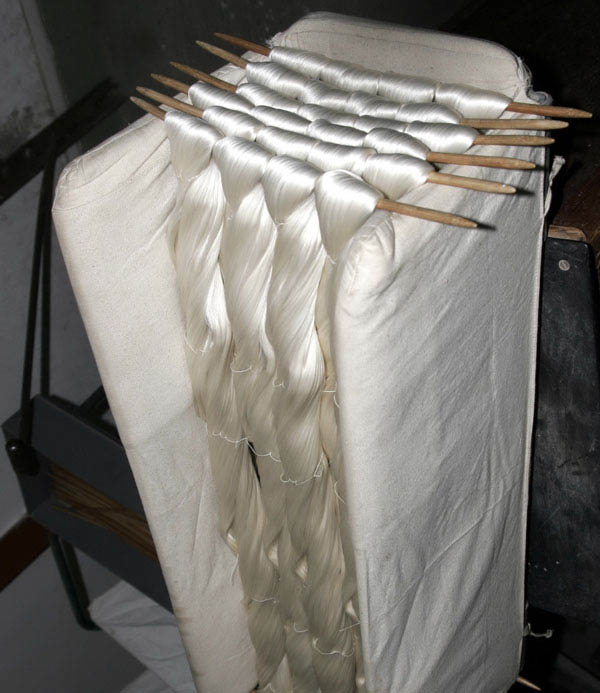
Properties of Silk Fiber
Silk is a natural protein fiber, containing a protein called Fibroin and another protein called Sericin, which has a sticky, glue-like quality that helps bind two fibers together. The protein in silk fiber consists of amino acids linked together into long chains called polypeptide chains. Fibroin differs from keratin, the protein found in animal hair/wool, in that it lacks the cross-linking bonds known as cystine or sulfur linkages found in animal hair fiber. The protein in silk fiber consists of about 15 types of amino acids, mostly simple amino acids such as Glycine, Alanine, and Serine. The molecules of silk fiber are arranged in a very orderly manner, giving the fiber great strength and durability.
Key Characteristics of Silk Fiber
1. Very strong fiber, absorbs moisture well, and is durable, but difficult to care for
2. Comfortable to wear, suitable for all climates (not too cold or too hot)
3. Not resistant to acids, but resistant to alkalis and other chemicals
4. Low fabric density (lightweight)
แชร์หน้านี้ให้เพื่อน: